Most online security guides are written for people who have a team of system administrators. After all, you’re just one person with a phone and a couple of dozen accounts, so you want something brief. These ten suggestions have been culled from the most helpful...
The way you studied in high school is expired, and it's usually up and dead by the first midterm. Rereading and highlighting your chapter worked great while your tests were on two week spans of material, but not so much when suddenly it's six chapters and a stack of...
Signing a lease is exciting right up until you realize how much of it you didn't actually read. A nice kitchen and good light can distract you from stuff that matters way more long-term — what's actually in the lease, what the building's really like to live in day to...
Buying a used car is one of those purchases where finding "the one" gets exciting enough that it's way too easy to skip the boring, careful stuff that actually protects you. A car can look great in photos, drive fine on a five-minute loop around the block, and still...
Have you ever looked at your bank account on a Friday afternoon and felt like you've been robbed? Between groceries, rent or mortgage, gas, utilities, insurance and the occasional subscription, bills can add up quicker than a speeding bullet. For many Americans, it's...
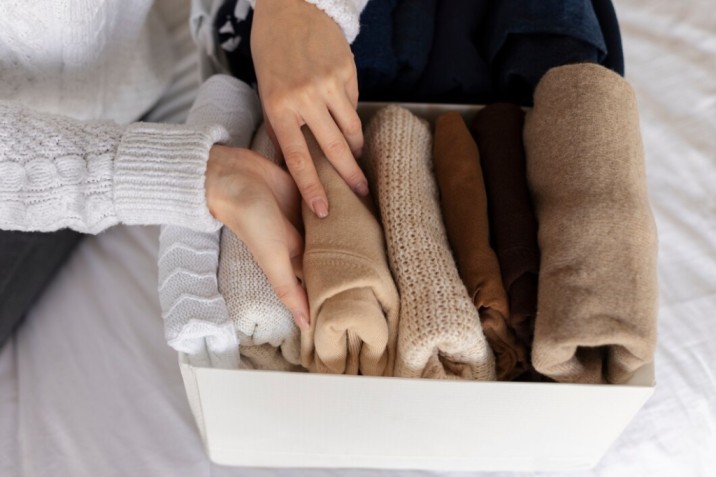
Winter dressing has a way of turning into a daily negotiation — warm enough to survive the walk to the car, but not so bundled up that you’re sweating the second you step into a heated building. Add in static, dry skin catching on wool, and a coat that somehow makes every outfit underneath look bulkier than it is, and it’s no wonder winter wardrobes get a bad reputation. Most of these problems have pretty straightforward fixes once you know what’s actually causing them.
Problem: You’re Either Too Cold Outside or Too Hot Inside
This is probably the single most common winter complaint, and it usually comes down to one thing: relying on a single heavy layer instead of building temperature control into the outfit itself.
The fix is layering with intention rather than just piling on bulk. A thin base layer against your skin, a breathable mid layer for actual insulation, and an outer layer that blocks wind — each layer is doing a specific job, so you can peel one off the moment you walk into an overheated office or subway car, without stripping down to something too thin for outside. Materials matter here too. Wool and merino base layers regulate temperature far better than cotton, which tends to trap moisture and then leave you cold once you’ve actually started sweating a little.
Problem: Everything Looks Bulky Under a Coat
A great outfit can disappear completely once a puffer coat goes on top of it, and a lot of people respond by just wearing baggier clothes underneath — which usually makes the bulk problem worse, not better.
The better approach is going slimmer underneath, not looser. Fitted or slightly tailored pieces worn under a coat actually reduce visual bulk, because the coat is doing the insulating work and your base layers don’t need to carry that weight on their own. It’s also worth paying attention to coat length relative to what’s underneath — a coat that hits mid-thigh over a long dress can visually shorten your whole silhouette, while a coat that ends higher, paired with a longer layer underneath, tends to look more proportional.
Problem: Static Cling Is Ruining Every Outfit
Static is a dry-air problem more than a wardrobe problem, but it’s still an outfit problem in practice — nothing undermines a put-together look faster than a skirt clinging to tights with every step.
A few things actually help here. Moisturizing your legs (if wearing tights) or treating fabric with a fabric softener sheet rubbed directly on the inside of a skirt or dress reduces the static charge significantly. Swapping synthetic fabrics like polyester for natural fibers also helps, since synthetics are far more prone to building up static in dry winter air. And a small anti-static spray kept in a bag or coat pocket is a genuinely useful emergency fix for the days none of the prevention worked.
Problem: Your Shoes Aren’t Built for the Actual Weather
Cute boots and functional winter boots are not always the same pair, and a lot of people end up choosing style over traction on days that call for the opposite — which usually ends in either wet, freezing feet or a genuinely dangerous slip on ice.
The fix isn’t necessarily buying a second, uglier pair of boots. Look for boots with actual tread patterns designed for ice and snow, not just a smooth leather sole that looks nice but offers no real grip. A waterproof or water-resistant upper matters as much as the sole does — suede and unsealed leather absorb salt stains and water in a way that ruins the shoe over a single winter season. If a favorite pair genuinely isn’t weather-appropriate, a rubber overshoe or shoe cover can extend its use into rougher weather without retiring it entirely.
Problem: Hats and Scarves Wreck Your Hair and Makeup
Winter accessories solve one problem (being cold) while creating another (hat hair, smudged lipstick from a scarf, static-charged flyaways from a wool hat).
Silk or satin-lined hats reduce a lot of the friction that causes both static and hair breakage — worth the upgrade if you’re wearing a hat daily through the season. For scarves near the face, a silk or silk-blend option glides rather than smudges, unlike a wool scarf pulled up over lipstick. And for hat hair specifically, a hat that fits properly rather than snugly makes a bigger difference than most people expect — a too-tight hat creates a more defined, harder-to-fix crease than a hat that fits with a little room.
Problem: Your Winter Wardrobe Feels Like One Long Grey Blur
Cold-weather clothing tends to default toward black, grey, and navy, and after a few months it can start to feel like dressing in the same three outfits on repeat.
Color doesn’t have to disappear just because the temperature drops. A colorful scarf, a bright coat, or even colored tights under a neutral dress can break up the monotony without requiring lighter fabric that isn’t actually warm enough for the season. Texture helps too — a chunky knit, a faux fur trim, or a textured wool coat adds visual interest to an outfit even when the color palette itself stays fairly muted.
The Bottom Line
Most winter wardrobe problems aren’t really about needing more clothes — they’re about the clothes you already have working against each other instead of together. Layering with intention, choosing the right fabrics for the actual conditions, and paying attention to small details like scarf material or boot tread solves the majority of complaints people have about dressing for cold weather. The goal isn’t surviving winter dressing — it’s actually getting dressed without dreading it every morning.






0 Comments